
Can Poor Posture Cause Headaches? Here’s What You Need to Know
August 11, 2026
If you’ve ever noticed a headache after a long day at the computer, driving for several hours, or looking down at your phone, your posture may be playing a bigger role than you realize.
The answer is yes: poor posture can contribute to headaches.
While headaches can have many different causes, prolonged poor posture places increased stress on the muscles, joints, and nerves of the neck and upper back. Over time, this extra strain can lead to neck pain, muscle tension, and recurring headaches.
The good news is that posture-related headaches are often highly treatable once the underlying movement problems are identified and addressed.
At Gordon Physical Therapy, we frequently help people throughout Spokane Valley, WA who are surprised to learn that improving the way their neck, shoulders, and upper back move can significantly reduce their headaches.
How Does Poor Posture Cause Headaches?
Many people picture posture as simply “standing up straighter,” but the reality is much more complex.
Your head weighs approximately 10 to 12 pounds. When it sits directly over your shoulders, your muscles don’t have to work very hard to support it.
As your head gradually moves forward, however, those muscles must work much harder.
Imagine holding a bowling ball close to your chest. It’s relatively easy.
Now hold that same bowling ball at arm’s length.
It suddenly feels much heavier—even though the weight hasn’t changed.
Your neck experiences the same effect when your head drifts forward.
The farther your head moves away from your shoulders, the greater the stress placed on your muscles and joints.
Over time, this increased workload can contribute to muscle fatigue, tightness, neck pain, and headaches.
Forward Head Posture: It’s More Than Just Your Neck
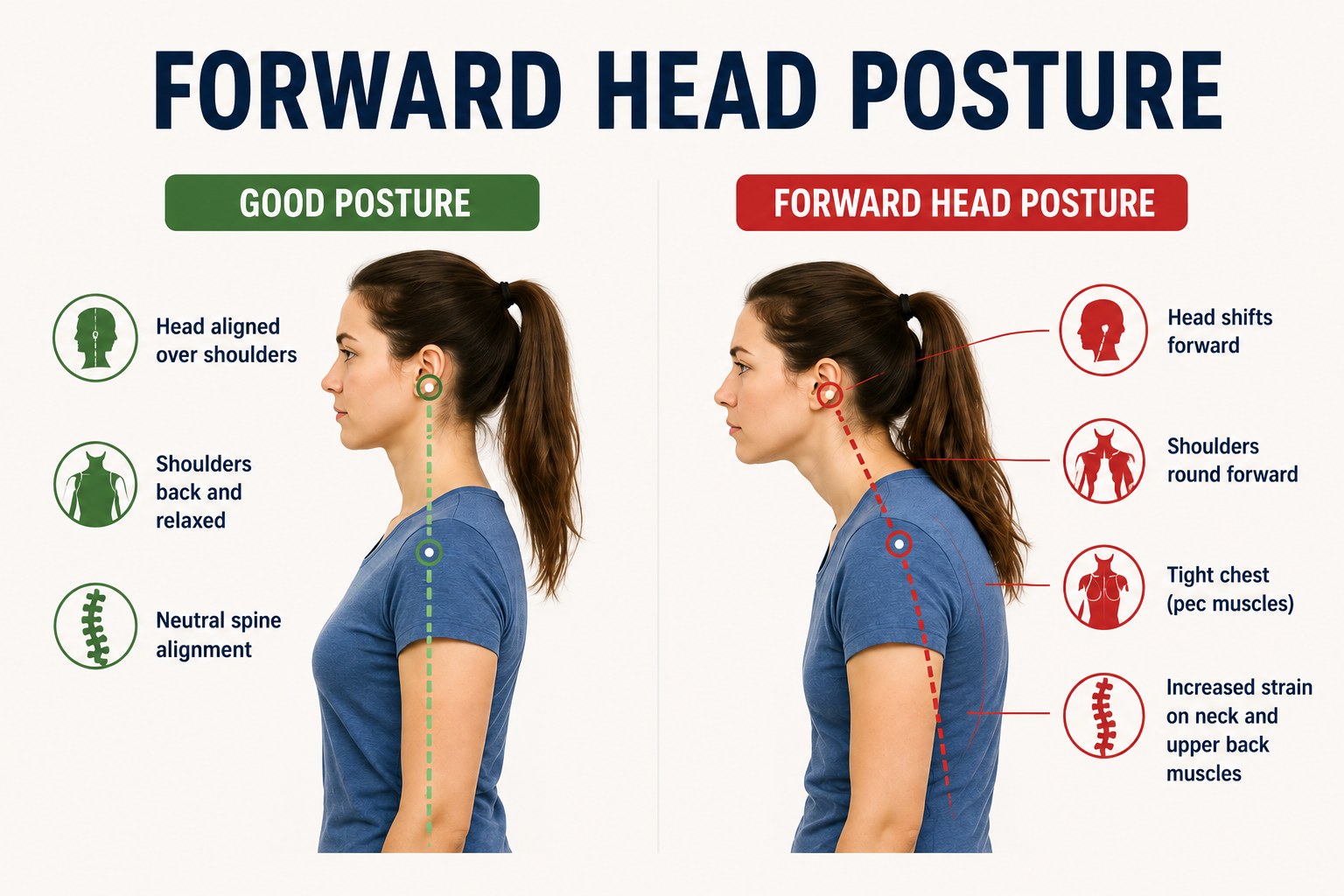
One of the most common postural patterns we see is called forward head posture.
Despite its name, this problem involves much more than just the neck.
As the head gradually moves forward, several changes often occur throughout the upper body:
- The shoulders begin to round forward.
- The upper back becomes more rounded.
- The muscles across the front of the chest (the pectoral muscles) become shortened and tight.
- The muscles between the shoulder blades become stretched and weak.
- The muscles at the base of the skull and back of the neck work much harder to support the head.
These changes don’t happen overnight. They often develop gradually after months or years of prolonged sitting, computer work, smartphone use, or repetitive daily activities.
Because all of these structures work together, focusing on the neck alone often doesn’t completely solve the problem.
Why Tight Chest Muscles Matter
Many people are surprised to learn that tight muscles in the front of the chest can contribute to neck pain and headaches.
As the pectoral muscles become shortened, they pull the shoulders forward into a rounded position. This changes the alignment of the entire upper body and places additional stress on the muscles of the neck.
At the same time, the muscles between the shoulder blades become lengthened and weaker, making it even harder to maintain good posture.
This combination often creates a cycle where poor posture leads to muscle imbalance, muscle imbalance increases stress on the neck, and that increased stress contributes to headaches.
Why “Sitting Up Straight” Usually Isn’t Enough
One of the biggest misconceptions about posture is that you simply need to remind yourself to sit up straighter.
If it were that easy, most people wouldn’t continue struggling with neck pain and headaches.
Posture is influenced by muscle flexibility, strength, joint mobility, movement habits, and even the way you perform everyday activities.
Without addressing these underlying factors, your body will naturally return to its previous posture.
How Physical Therapy Can Help
At Gordon Physical Therapy, we don’t simply tell people to improve their posture—we help them understand why their posture changed and what can be done to improve it.
Treatment is individualized and may include several approaches.
Stretching Tight Muscles
Forward head posture often causes the muscles across the chest and front of the shoulders to become shortened.
Targeted stretching helps restore flexibility and allows the shoulders to move back into a healthier position.
Strengthening the Shoulder Blade Muscles
The muscles that stabilize the shoulder blades are essential for maintaining healthy posture.
When these muscles become weak, the shoulders tend to drift forward, placing additional strain on the neck.
Strengthening these muscles helps support better posture while reducing unnecessary stress on the cervical spine.
Hands-On Manual Therapy
One of the biggest differences between our approach and many generic exercise programs is the use of hands-on manual therapy.
Sometimes muscles become so tight that stretching alone isn’t enough to restore normal movement. Likewise, joints in the neck and upper back may become stiff and contribute to ongoing symptoms.
Manual therapy techniques can help reduce muscle tension, improve joint mobility, and restore movement so that stretching and strengthening exercises become much more effective.
Many of our patients have already tried exercises or stretches on their own—or even at another clinic—without lasting success. In many cases, combining manual therapy with the right exercises helps them finally make meaningful progress.
Improving Movement Habits
We’ll also help you identify everyday activities that may be contributing to your symptoms, including workstation setup, computer use, driving posture, lifting mechanics, and smartphone use.
Small changes throughout the day can significantly reduce stress on your neck over time.
Good Posture Doesn’t Mean Perfect Posture
Another common misconception is that there is one perfect posture you should maintain all day.
The truth is that the best posture is your next posture.
Even good posture can become uncomfortable if you stay in the same position for hours.
Regular movement, changing positions, standing up frequently, and maintaining strength and flexibility are all important parts of keeping your neck healthy.
When Should You Seek Help?
You may benefit from a physical therapy evaluation if:
- You frequently experience headaches after computer work.
- You have neck pain along with your headaches.
- Your shoulders feel tight or rounded forward.
- You notice stiffness when turning your head.
- Stretching only provides temporary relief.
- You’ve tried exercises before but your symptoms keep returning.
A thorough evaluation can help determine whether your posture is contributing to your symptoms and identify the most effective treatment approach.
Frequently Asked Questions
Can poor posture really cause headaches?
Yes. Poor posture can increase stress on the muscles and joints of the neck, leading to muscle tension, joint irritation, and headaches.
What is forward head posture?
Forward head posture occurs when the head gradually moves in front of the shoulders. This position increases the workload on the neck muscles and is commonly associated with rounded shoulders, tight chest muscles, neck pain, and headaches.
Can rounded shoulders cause headaches?
Indirectly, yes. Rounded shoulders often contribute to forward head posture, which increases stress throughout the neck and upper back and may contribute to headaches.
Why haven’t stretching exercises fixed my posture?
Stretching is only one part of the solution. Many people also need strengthening exercises, improved movement habits, and manual therapy to restore normal mobility and address muscle imbalances.
Can physical therapy help improve posture?
Yes. Physical therapy focuses on identifying the underlying factors contributing to poor posture and developing an individualized treatment plan that may include manual therapy, stretching, strengthening, movement retraining, and ergonomic recommendations.
Ready to Find the Root Cause of Your Headaches?
If you’re experiencing recurring headaches, neck pain, or stiffness, poor posture may be part of the problem.
At Gordon Physical Therapy, we help people throughout Spokane Valley identify the underlying cause of their symptoms and develop personalized treatment plans designed to provide lasting relief.
Learn more about our Neck Pain & Headaches Treatment Program by visiting this URL: https://physicaltherapyspokane.com/neck-pain-headaches-treatment/ or call or text us today to request an appointment!
"Tell Us Where It Hurts..."
And we'll send you our best advice and top tips in one special report...
It's FREE! Just look below and find the one that works best for you...


Monday 7:00 am - 6:00 pm
Tuesday 7:00 am - 6:00 pm
Wednesday 7:00 am - 6:00 pm
Thursday 7:00 am - 6:00 pm
Friday 7:00 am - 5:00 pm
Saturday Closed
Sunday Closed
© 2024 Gordon Physical Therapy