Blog Category Hip Pain
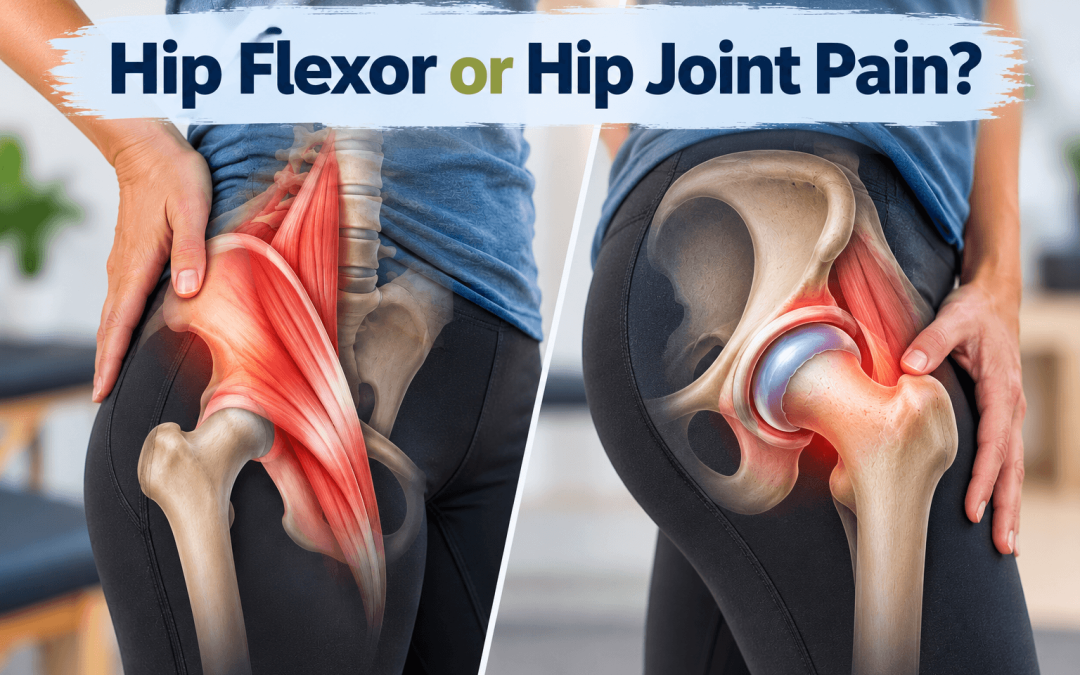
Hip Flexor Pain or Hip Joint Pain? How to Tell the Difference
Do you have pain in the front of your hip or groin? You might assume you’ve strained your hip flexor or that your hip muscles are simply too tight.
But what if the pain isn’t coming from your hip flexors at all?
Pain in the front of the hip can originate from several different structures, including the hip flexor muscles and tendons, the hip joint itself, or even nearby areas such as the lower back.
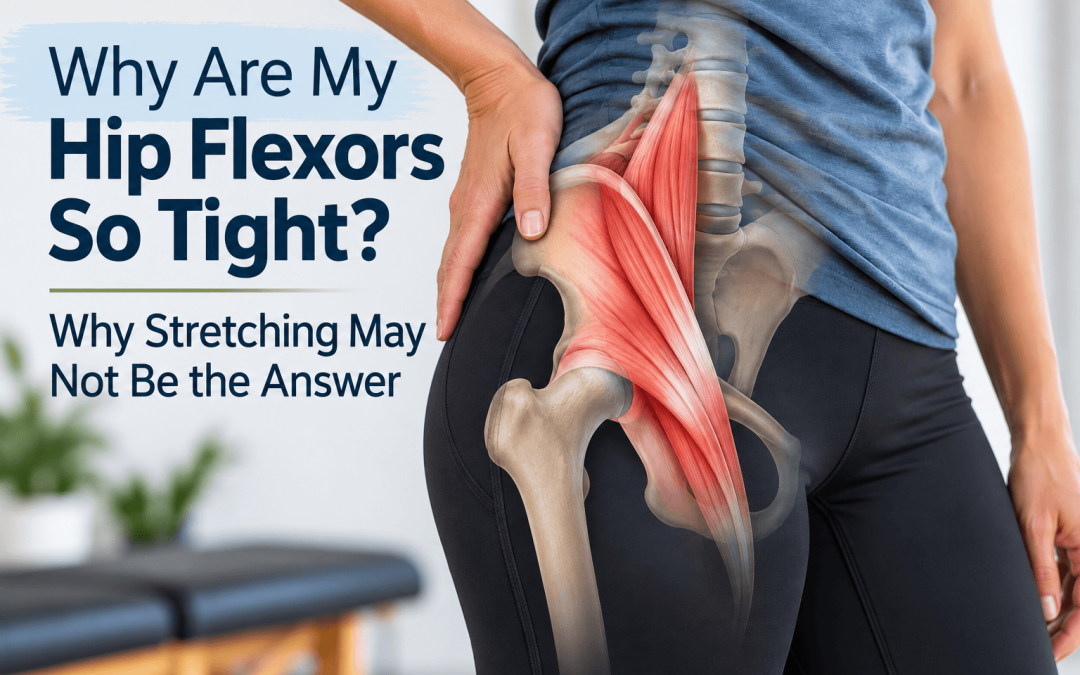
Why Are My Hip Flexors So Tight? Why Stretching May Not Be the Answer
If your hip flexors always feel tight, your first instinct is probably to stretch them.
You may stretch before exercising, after sitting at your desk, or several times throughout the day. The stretch might feel good temporarily—but a few hours later, the tightness is back.
So why do your hip flexors keep feeling tight?
One important thing to understand is that a muscle that feels tight isn’t necessarily a muscle that simply needs to be stretched more.

Femoroacetabular Impingement in Young Athletes: When Hip Pain Isn’t Just Tight Hip Flexors
Hip pain in young athletes often isn’t tight hip flexors. Learn about femoroacetabular impingement (FAI), a structural condition affecting 25% of athletes.

How to fix “Hip Bursitis” (aka “Trochanteric Bursitis”)
If you have pain along the outside of one of your hips, right near the bone that you can feel with your hands, it’s very likely that you have “hip bursitis” or “trochanteric bursitis”.
This bony prominence is called your “greater trochanter”, which is why this type of hip pain is often called “trochanteric bursitis”.
In this video, I’ll explain how to treat your hip bursitis pain, which starts with finding the ROOT CAUSE of your pain and then following what I call the “3 Phases of Recovery”.
Check out the video if you’d like to learn how to eliminate your hip bursitis pain!
I also have a video about what causes hip bursitis and trochanteric bursitis, and you’re welcome to start with that video first (I link to that video at 34 seconds into this one).
I hope this video helps you eliminate your hip bursitis pain!

“What Is/Causes Hip Bursitis?” (aka “trochanteric bursitis”)
Do you have pain along the outside of your thigh, right near that bony prominence that you can feel with your hands? (This bony prominence is your “greater tuberosity” in medical terms)
If so, you might just have hip bursitis, although known as “trochanteric bursitis”.
In this video, I’ll explain what hip bursitis is, as well as what causes it. I’ll also explain more about how the muscle tendons that attach to your greater tuberosity are often the cause of hip bursitis pain.
And in future videos, I’ll explain how to treat hip bursitis and achieve lasting hip pain relief.
I hope it helps!
"Tell Us Where It Hurts..."
And we'll send you our best advice and top tips in one special report...
It's FREE! Just look below and find the one that works best for you...


Monday 7:00 am - 6:00 pm
Tuesday 7:00 am - 6:00 pm
Wednesday 7:00 am - 6:00 pm
Thursday 7:00 am - 6:00 pm
Friday 7:00 am - 5:00 pm
Saturday Closed
Sunday Closed
© 2024 Gordon Physical Therapy