
Physical Therapy Clinic Spokane Blog

Piriformis Syndrome – What Is It? Plus 3 Simple Piriformis Stretches
“Piriformis Syndrome” refers to irritation of your piriformis muscle, which is located deep in your buttocks, beneath larger muscles like your gluteus maximus.
I affectionately refer to this issue as a “pain in the butt”… and for good reason!
That’s because most people with an irritated piriformis muscle explain it as pain localized in one of their buttocks.
However, in addition to localized pain in the buttocks, people with piriformis syndrome can also experience “sciatica” or sciatic nerve pain, which causes pain shooting down the back of the leg.
Today’s blog post features 2 videos about piriformis syndrome…
In the first video, I’ll explain what the piriformis muscle is, how it gets irritated, and how it can cause sciatic nerve pain (aka “sciatica”).
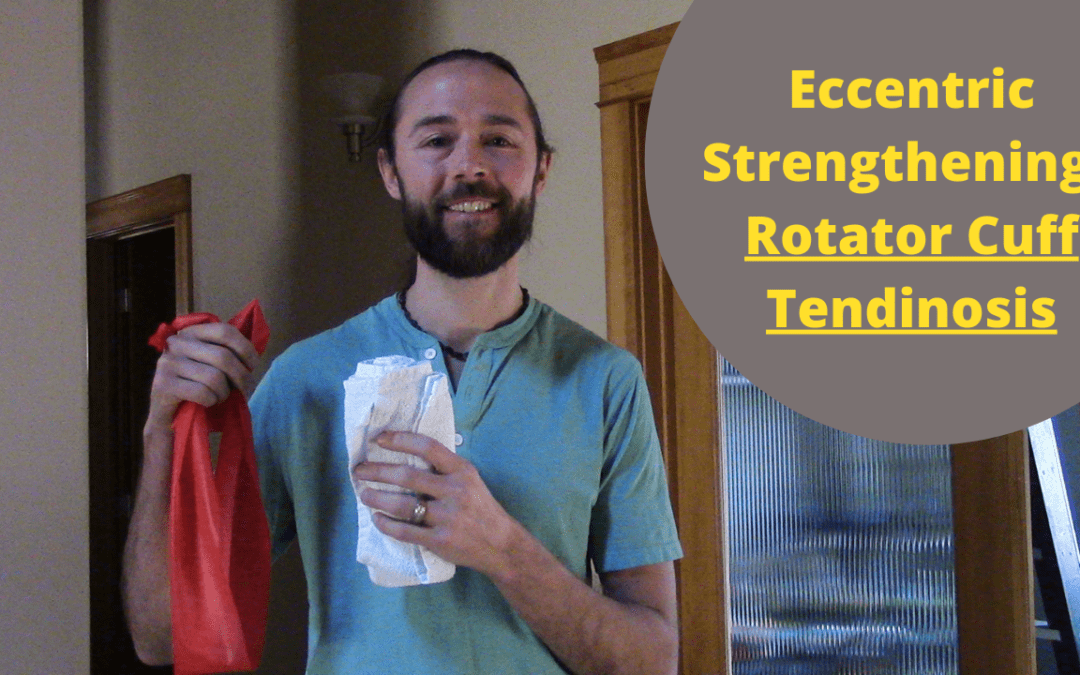
Eccentric Strengthening for “Rotator Cuff Tendinosis” (Shoulder Pain)
If you’ve seen any of my videos about “tendinosis” in general, you’ve probably heard me say how doing “eccentric strengthening” is an important part of the healing process.
Tendinosis in the rotator cuff muscles is a very common cause of shoulder pain.
On an MRI report, it will be described as things like “supraspinatus tendinosis” or “infraspinatus tendinosis”.
If you’re looking for a simple and effective way to perform eccentric strengthening for “Rotator Cuff Tendinosis”, I’ll show you the best way to do so at home.

4 Videos on Shoulder Pain & the Rotator Cuff
Lately, I’ve been getting a lot of questions from clients at the clinic and people online about some common conditions related to shoulder pain and the rotator cuff.
This includes questions about certain key terms, including the following:
– Supraspinatus
– Infraspinatus
– Tendinosis
– Impingement
Those first 3 terms are very common on MRI reports. For example, if you’ve had an MRI for your shoulder pain, the report may have found that you have “moderate tendinosis” of the “supraspinatus” muscle… or maybe you have “mild tendinosis” of the “infraspinatus” muscle.
Since these terms are so common, and they aren’t exactly self-explanatory, I just made a new round of videos to explain these terms. Check them out!

How to set up your Home Office during COVID (5 simple steps)
More people than ever are now working from home, and what many are finding is that their home office setup is far from ideal.
This leads to increased issues with neck pain, shoulder pain and headaches, as well as aggravation of existing issues with lower back pain and sciatica.
If this sounds like you, I want to share some simple tips to help you improve your home office setup, which will allow you to reduce the likelihood of experiencing things like neck pain, shoulder pain and headaches (as well as lower back pain and/or sciatica pain).

Simple Exercises to Improve Your Balance at Home (3 Videos)
If you’re looking for simple exercises to help you improve your balance at home, this post is just for you!
I just created 3 new videos where I demonstrate simple and effective balance exercises.
All you need is a foam pad or couch cushion for some of them (or an old pillow you don’t mind stepping on!).
Just one word of caution before you checking out these videos: please make sure you prioritize your safety!
"Tell Us Where It Hurts..."
And we'll send you our best advice and top tips in one special report...
It's FREE! Just look below and find the one that works best for you...


Request An Appointment
Free Discovery Visit

Monday 7:00 am - 6:00 pm
Tuesday 7:00 am - 6:00 pm
Wednesday 7:00 am - 6:00 pm
Thursday 7:00 am - 6:00 pm
Friday 7:00 am - 5:00 pm
Saturday Closed
Sunday Closed
Gordon Physical Therapy - Spokane Valley, WA
626 North Mullan Road #4, Spokane Valley, WA 99206
© 2024 Gordon Physical Therapy